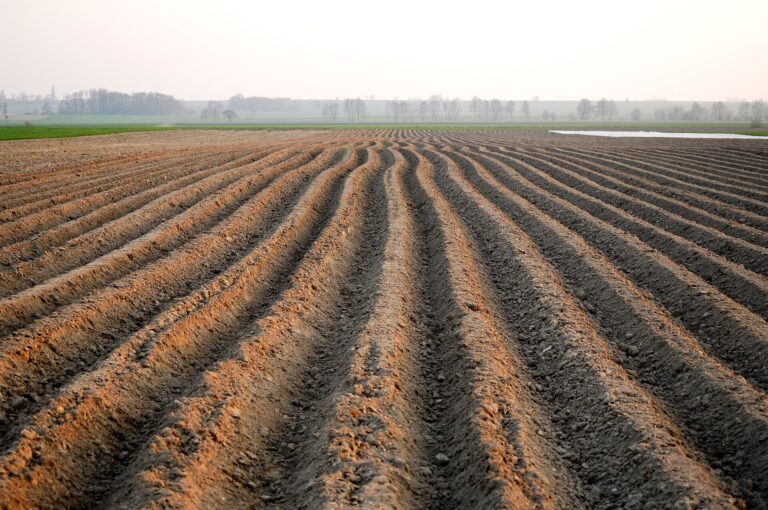
Ολλανδία: Καλλιεργητής σπόρων στο Φρίσλαντ διατηρεί την Άναμπελ καθαρή για πέντε γενιές χωρίς μίνι βολβούς
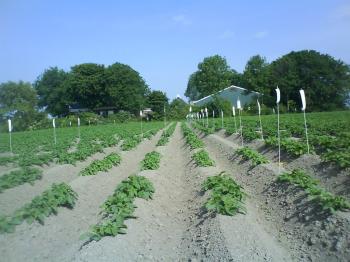
Βασικά καραβάνια
- 150 hectares grow about 19 varieties for seed classes
- 2026 yield averaged 38-40 t/ha, 5% above long-term
- 44 tonnes/ha gross estimated for the Annabelle field
- 1998 HZPC line became Annabelle a year later, in 1999
Γιατί έχει σημασία
- Για τους αγρότες
- Seed growers weighing minituber versus traditional clonal starts can note that five-generation lines of Annabelle, Spunta, Fabula and Innovator show low Erwinia pressure even at class S.
- Για προμηθευτές
- Marketers such as HZPC and Agroplant sourcing seed from multiplication farms can weigh traditional five-generation clones as a lower-bacterial-risk option for varieties that tolerate the method.
Σύνοψη 60 δευτερολέπτων
A seed potato grower in Friesland, the Netherlands, keeps the variety Annabelle clean for five generations by starting each line from a single plant instead of laboratory minitubers, says Anco van der Bos of Mts van der Bos-Weidenaar. The farm grows about 19 varieties on some 150 hectares of marine clay with 30% lutum, producing seed classes PB1 through S for HZPC and Agroplant, which resell it worldwide. HZPC gave the family the line in 1998; it was named Annabelle a year later. The 2026 season yielded 38-40 t/ha on average, about 5% above the long-term average, with the Annabelle field estimated near 44 t/ha gross. Traditional clones show few bacterial problems even at generation five, though PVY and leafroll still need agrochemical control and hand roguing. Van der Bos calls no-till, for water management and biodiversity, his proudest practice, and names government pressure to cut agrochemicals, not weather, as the main challenge ahead.
By Viktor Kovalev, POTATOES NEWS
On a seed potato farm in Friesland, on the Dutch coast of the Wadden Sea, the variety Annabelle has been multiplied from single plants for almost three decades, without minitubers from the laboratory. Anco van der Bos, who runs Mts van der Bos-Weidenaar in the third generation, grows around 19 varieties on some 150 hectares and answered questions from potatoes.news in September 2026.
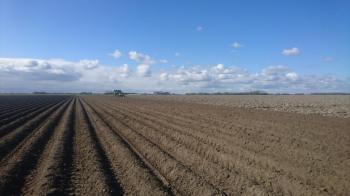
The farm produces seed in generations one to five, from class PB1 up to class S. It does not sell the seed itself. “The potatoes are sold by commercial companies like HZPC and Agroplant for instance, but all around the world, depending on the variety,” he says. The higher classes often stay in the Netherlands.
Καθημερινές. Διαγραφείτε με ένα κλικ.
The farm lies on marine clay with 30% lutum. In Dutch soil classification, lutum is the finest clay fraction, particles smaller than 2 micrometres. Such soils are fertile and hold water well, but they are heavy to work and easy to damage when wet.
This season’s list includes Actrice (Agroplant); Ambra, Annabelle, Carrera, Fabula, Innovator, Sunita, Sunny, Travolta and Victoria (HZPC), συν ένα HZPC breeding number; Inova, Vicenta and Virgil (Plantera); Montreal (TPC); SHC2030 and Zina Red (STET); and Spunta, grown both as a free variety and through STET. Asked about the end market, Anco pointed to fresh retail: yellow-fleshed, salad-type potatoes, with Cyprus, France and Germany as the main destinations.
Annabelle holds a special place on that list. The family received it from HZPC as a numbered breeding line in 1998; a year later it was named Annabelle. In a post on the farm’s LinkedIn page, Anco calls it one of the tastiest varieties they grow, and the family always eats it themselves as a new potato. It became big in Germany as a salad potato.
What matters more for seed growers elsewhere is how the line is kept. Annabelle is maintained as a traditional five-year clone reaching class S. “Traditional” here means that each line starts from the harvest of one single plant, which is then planted separately year after year. The alternative is to start from minitubers produced by in vitro tissue culture.
According to Anco, Annabelle, like Spunta, Fabula and Innovator, can be grown traditionally for five generations without trouble. The farm’s main argument for the method is bacterial disease. Even in the fifth generation, the traditional clones show few problems with Ερβίνια (blackleg and soft rot bacteria, now classified as Pectobacterium και Ντικέια). Next to viruses, this is one of the main reasons seed lots are downgraded.
The variety is not trouble-free. Potato virus Y (PVY) needs attention, and leafroll can occur. The farm fights PVY with agrochemicals and mineral oil sprays, and by roguing: removing diseased plants by hand. Younger seed generations are pre-sprouted before planting.
The 2026 season delivered around 38–40 t/ha on average, some 5% above the long-term average, Anco says. The Annabelle field was estimated at 44 tonnes gross per hectare, helped by a crop that stayed green for a long time. The tubers came out on the small side.
The crop is lifted with an AVR Spirit 9200 harvester. Most of it is stored in boxes on the farm, where forced ventilation and cooling keep the seed in condition until delivery.
The practice he is most proud of is no-till, because of water management and biodiversity, “which is a hot topic in the Netherlands.” His definition is specific. The arable land is not ploughed; only meadows are ploughed occasionally. Ridging, harvesting and other cultivation still count as part of the no-till routine. On a heavy marine clay, avoiding the plough protects soil structure and the pores that let water drain and roots grow.
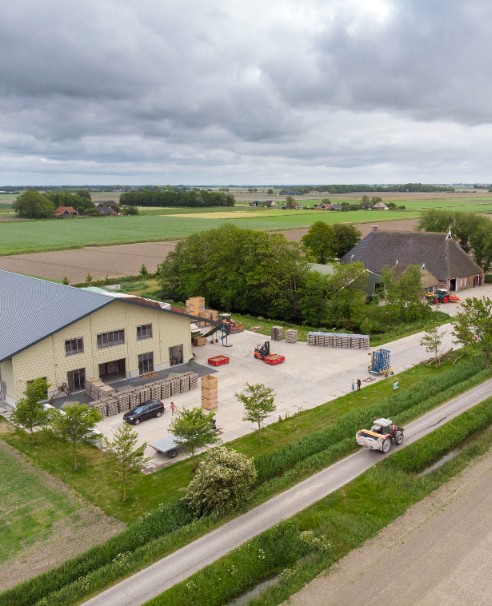
The weather is not his biggest worry. Asked about the main challenge, Anco named government regulation. “There is a lot of pressure from within the community to reduce agrochemicals,” he says. That, in turn, puts yields at risk. “There is no rational discussion sadly enough.” The second problem is cost: diesel and fertiliser prices keep rising, making it harder to bring the cost price down.
For seed growers, the two issues meet. With fewer crop protection products available, healthy starting material and hand work in the field carry more weight. A clone that stays clean of bacterial disease for five generations is one way to hold class without relying on chemistry alone.
potatoes.news first wrote about the family in 2021, in a story on circular farming along the Frisian Wadden coast.
Anco is the third generation on the farm. Asked whether a successor is lined up, he answered briefly: “nothing in the pipeline.”
Source: interview with Anco van der Bos, Mts van der Bos-Weidenaar, for potatoes.news (LinkedIn, September 2026); Mts van der Bos-Weidenaar post on Annabelle, published with permission.
Photos: Mts van der Bos-Weidenaar (1–2); Marcus Pasveer (3).
Παγκόσμια Σύνοψη Πατάτας
Οι πέντε κορυφαίες ιστορίες, τιμές, ειδοποιήσεις για ασθένειες και εκδηλώσεις. Καθημερινά πρωινά, χωρίς διαφημίσεις.
Τι επόμενη
No successor is yet lined up for the family farm, Anco van der Bos says; current methods, including traditional five-generation clonal selection instead of minitubers, are expected to continue.
Πηγές
- Interview with Anco van der Bos, Mts van der Bos-Weidenaar, for potatoes.news (LinkedIn, September 2026); farm's LinkedIn post on Annabelle used with permission; earlier potatoes.news story on the family (2021).
Σύνδεσμος σε αυτό το υλικό
- Χώρα
- Ολλανδία
Σχετικές ιστορίες
Ευρώπη: Ο κλώνος της όψιμης σήψης στην ΕΕ_36 μειώνεται στο 34% των δειγμάτων, καθώς η ανθεκτικότητα στην ΕΕ_43 αυξάνεται στο 12%
Ουγγαρία: Η έκταση καλλιέργειας πατάτας μειώνεται σε περίπου 5,065 εκτάρια, το ένα δέκατο των επιπέδων της δεκαετίας του 1990